GEOTECHNICAL ENGINEERING
HAMPTON VIRGINIA
HomeInvestigationExploratory test pit

Exploratory Test Pit Investigation in Hampton Virginia

Rigorous testing. Clear reporting.

LEARN MORE

A tracked mini-excavator breaks ground off Magruder Boulevard, its narrow 24-inch bucket slicing through Hampton's stratified coastal plain deposits. The exploratory test pit unfolds section by section, revealing tan sands, mottled silts, and occasional shell fragments that mark the geologic boundary between the Yorktown Formation and younger Quaternary sediments. Hampton's landscape, carved by the ancestral James River and perched at just 10 feet above mean sea level near its tidal tributaries, poses distinct stratigraphic challenges for any foundation design. Direct visual examination via test pit investigation eliminates the ambiguity of indirect methods. When a test pits program requires tactile confirmation of bedding planes, groundwater seepage, or fill thickness beneath former marshland, the excavator operator and geotechnical engineer work side by side, documenting each lift with ASTM D2487 field classifications and photography before the tide potentially obscures the observation.

Direct visual logging of a 12-foot Hampton test pit face captures stratigraphic transitions that even closely spaced SPT borings routinely miss.
Our service areas

Our approach and scope

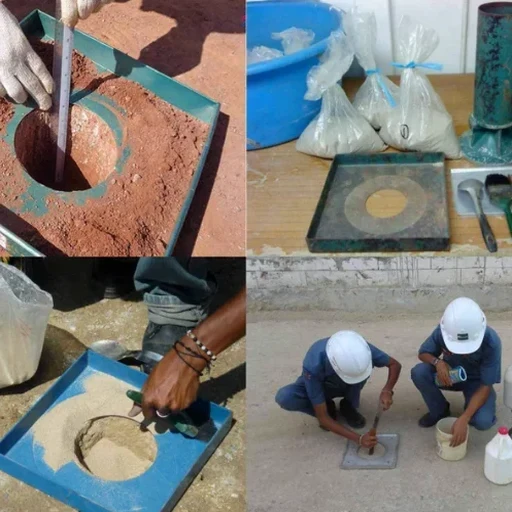
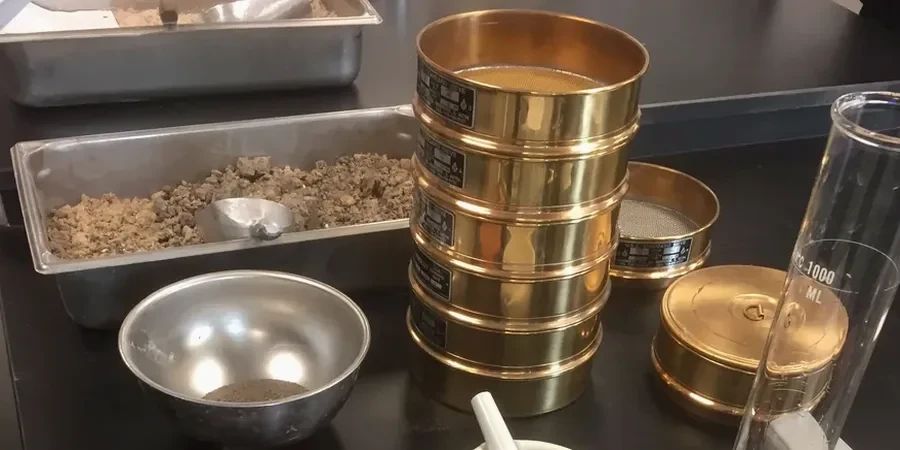
ASCE 7-22 and the 2021 IBC require site-specific subsurface data for Seismic Site Class determination, and Hampton's location within the Coastal Plain physiographic province makes stratigraphic continuity anything but predictable. The Yorktown Formation's shelly sands can transition laterally into stiff, overconsolidated clays within a single city block, a reality that renders borehole-only investigations insufficient for shallow foundation design. Exploratory test pit investigation bridges this gap by exposing a continuous vertical face to depths of 12 to 15 feet. The field geologist logs stratigraphy, measures in-situ density with a sand cone or nuclear gauge, and collects bulk samples for grain-size analysis and Atterberg limits testing. Where the water table sits within 4 to 6 feet of grade—common across Hampton's low-lying neighborhoods like Phoebus and Wythe—the pit becomes a direct observation window into seasonal groundwater behavior, a parameter no split-spoon sample can replicate.
Exploratory Test Pit Investigation in Hampton Virginia
Technical reference — Hampton Virginia

Site-specific factors

Hampton sits squarely atop the Virginia Coastal Plain, where subsurface conditions shift from Pleistocene-age fluvial terraces to Holocene marsh deposits in less than half a mile. The water table across much of the city resides at depths between 3 and 7 feet, fluctuating with tidal cycles from the Hampton Roads harbor and its tributaries. An inadequately documented fill layer—wood debris, dredge spoil, or ash from early 20th-century development—overlying compressible organic silt can go undetected by SPT borings spaced at 50-foot intervals. A single exploratory test pit across the buildable footprint reveals these anthropogenic horizons with zero interpretive ambiguity. The consequence of missing a 3-foot layer of loose, saturated fill is differential settlement that manifests within the first year of service, cracking slab-on-grade floors and racking framed walls. Hampton's wind exposure, governed by ASCE 7 Risk Category II speeds approaching 130 mph, demands that shallow foundations resist uplift and overturning; that resistance calculation begins with accurate unit weight and friction angle data extracted directly from the test pit face.

Need a geotechnical assessment?

Reply within 24h.

Email: contact@geotechnical-engineering.vip

Regulatory framework

ASTM D2487 – Standard Practice for Classification of Soils for Engineering Purposes (Unified Soil Classification System), OSHA 29 CFR 1926 Subpart P – Excavations (sloping and benching requirements for Type A, B, and C soils), ASTM D1556 – Standard Test Method for Density and Unit Weight of Soil in Place by the Sand-Cone Method, ASCE 7-22 – Minimum Design Loads and Associated Criteria for Buildings and Other Structures (Seismic Site Class and wind provisions), 2021 IBC Section 1803 – Geotechnical Investigations (subsurface exploration requirements for foundation design)

Reference parameters

ParameterTypical value
Maximum excavation depth (conventional)15 ft (4.6 m) with Type C soil benching per OSHA 1926 Subpart P
Bucket width / sample access18–24 inches; bulk and undisturbed block samples collected from pit floor and walls
In-situ density testing methodASTM D1556 sand cone or nuclear gauge per ASTM D6938
Groundwater monitoringObservation of seepage, phreatic surface, and tidal influence during open-pit window
Field classification standardASTM D2487 / USCS, supplemented with Munsell color notation
Typical open-pit duration4–8 hours depending on depth, soil stability, and groundwater inflow
Applicable safety regulationOSHA 29 CFR 1926 Subpart P – sloping, benching, or shoring as required

Common questions

What depth can a test pit reach in Hampton's sandy soils?

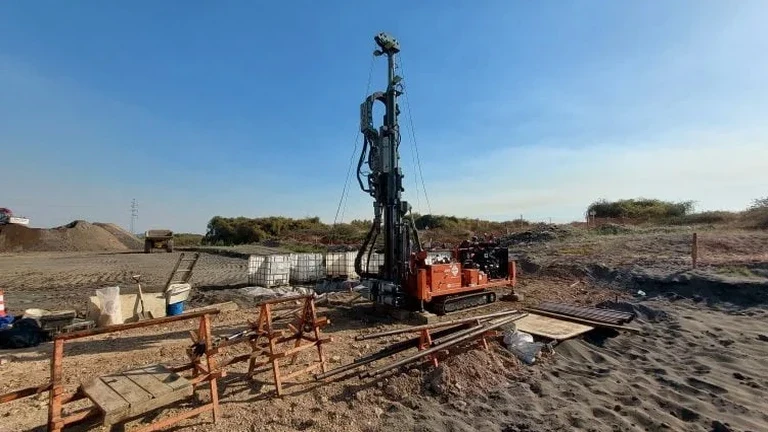
Conventional excavator test pits in Hampton typically reach 10 to 15 feet, depending on the stability of the Yorktown Formation sands and the position of the water table. Where the water table sits above 4 feet, groundwater inflow limits practical depth unless dewatering is employed. For deeper stratigraphic targets, test pits are often paired with SPT borings.

Is an exploratory test pit considered an OSHA-regulated excavation?

Yes. OSHA 29 CFR 1926 Subpart P applies. Hampton soils are generally classified as Type C, which requires a slope of 1.5H:1V (34 degrees) for unshored pits. Our field crews implement benching or sloping plans before personnel enter the excavation, and a competent person inspects the pit at the start of each shift and after any weather event.

What is the typical cost range for an exploratory test pit in Hampton?

Exploratory test pit investigation in Hampton generally ranges from US$450 to US$800 per pit, depending on depth, access constraints, and the extent of field testing such as in-situ density measurements. Mobilization is priced separately and varies with distance from the equipment yard.

Can you collect undisturbed samples from a test pit for laboratory shear strength testing?

Block samples for laboratory analysis can be carved directly from the pit floor or walls in cohesive soils. For granular Hampton sands, Shelby tube sampling or SPT split-spoon recovery is more practical. We coordinate test pit excavation with a concurrent SPT drilling program when undisturbed sampling at greater depths is required.

Location and service area

We serve projects in Hampton Virginia and surrounding areas.

View larger map