GEOTECHNICAL ENGINEERING
HAMPTON VIRGINIA
HomeUnderground ExcavationsGeotechnical design of deep excavations

Deep Excavation Geotechnical Design in Hampton Virginia

Rigorous testing. Clear reporting.

LEARN MORE

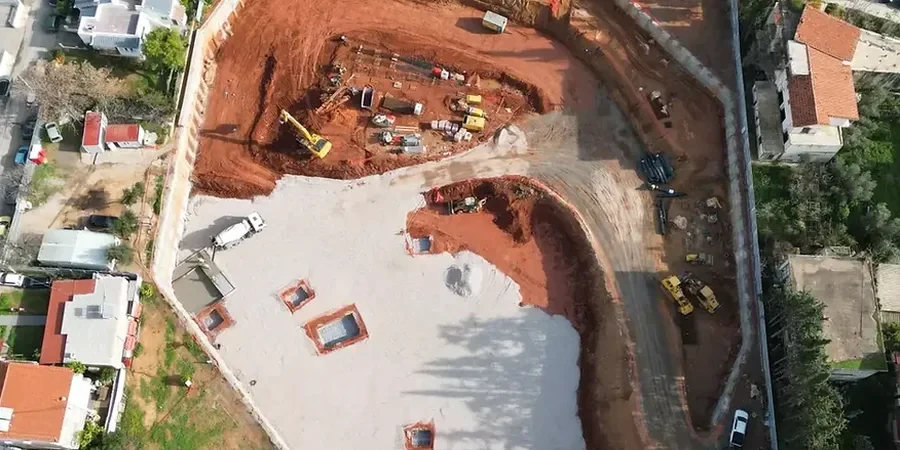
A mid-rise development near the Hampton Roads Convention Center ran into trouble when the excavation hit a pocket of loose silty sand at 18 feet. The contractor called us after the preliminary benching started sloughing. In Hampton, deep excavation design is not something you can templatize. The city sits on the Atlantic Coastal Plain, with subsurface profiles that shift from stiff Yorktown Formation clays to loose Pleistocene sands within a few hundred feet. Our approach integrates in-situ testing, groundwater modeling, and staged shoring analysis under ASCE 7 load combinations. Before breaking ground on any cut deeper than 10 feet, the CPT test provides a continuous stratigraphic log that picks up thin sand lenses traditional borings often miss, and in areas where the water table hovers within 5 feet of grade, the in-situ permeability testing becomes critical for designing a dewatering system that actually works.

Excavation design in Hampton must account for the Yorktown Formation clay: stiff near the surface but prone to softening when dewatering lowers the effective stress.
Our service areas

Our approach and scope

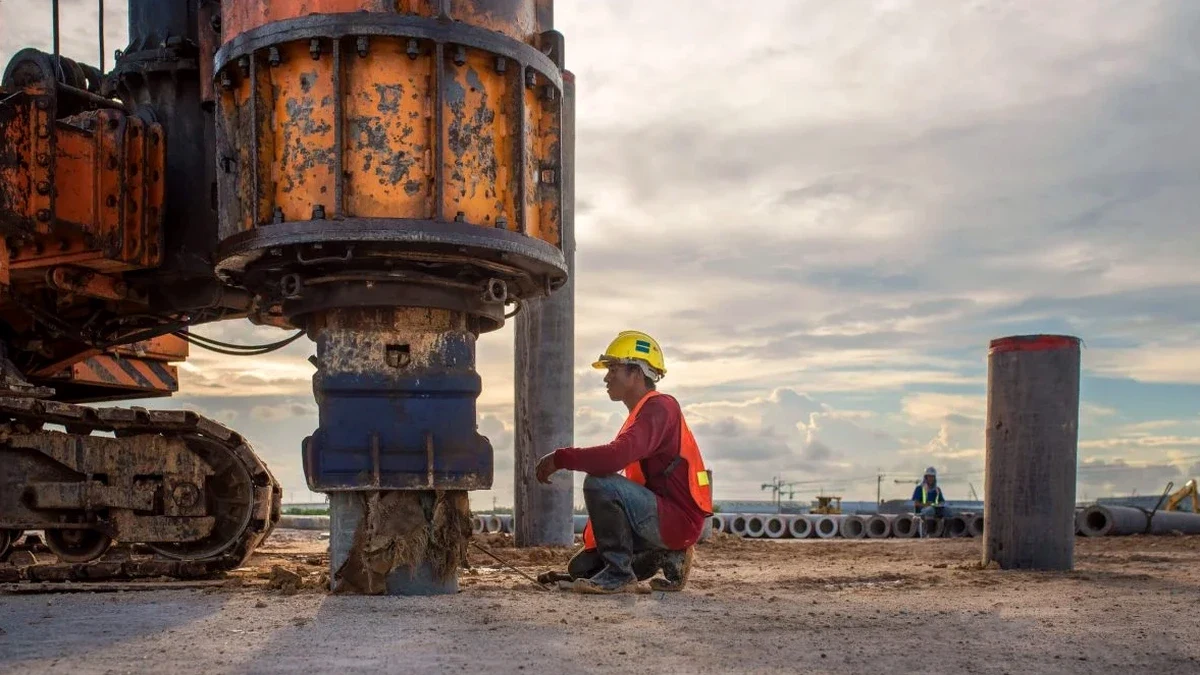
The field equipment we deploy on Hampton excavation projects starts with a tracked CPT rig that pushes a 15 cm² cone at a constant 2 cm/sec rate, recording tip resistance, sleeve friction, and pore pressure simultaneously. This data feeds directly into Plaxis 2D and 3D models where we simulate staged excavation sequences with strut preloading and tieback lock-off loads. Soil samples collected from companion borings go through consolidated-undrained triaxial testing to capture the undrained shear strength of the Yorktown Formation clay, which governs base stability in cuts exceeding 20 feet. We also run constant-head permeability tests on Shelby tube samples to calibrate the groundwater flow models. The combination of high-resolution CPT data and laboratory-derived strength parameters produces a ground model that resolves the layered stratigraphy typical of the Tidewater region. For cuts in mixed sand-clay profiles, the triaxial testing program provides effective stress parameters that are essential for modeling excavation-induced pore pressure changes.
Deep Excavation Geotechnical Design in Hampton Virginia
Technical reference — Hampton Virginia

Site-specific factors

Hampton's subtropical climate introduces a risk that drier climates do not face: hurricane-season rainfall can raise the groundwater table by 2 to 3 feet in 48 hours, turning a dewatered excavation into a sump. We saw this on a downtown utility trench where a summer thunderstorm overwhelmed the wellpoint system. The geotechnical design must include a contingency for rapid recharge scenarios, specifying backup pumps and emergency sump capacity beyond what the steady-state model predicts. Another local concern is the presence of artesian conditions in the deeper Potomac Aquifer, which underlies parts of the city. If an excavation penetrates the confining layer without proper cut-off measures, uncontrolled upward seepage can cause piping and base heave. Our designs incorporate detailed seepage analyses with critical hydraulic gradient checks, and when artesian pressures are confirmed, we specify jet grouting or deep soil mixing to create a hydraulic barrier. The cost of ignoring these conditions runs well beyond project delays; it can mean structural collapse of the shoring system.

Need a geotechnical assessment?

Reply within 24h.

Email: contact@geotechnical-engineering.vip

Watch the video

Regulatory framework

ASCE 7-22 Minimum Design Loads and Associated Criteria for Buildings and Other Structures, IBC 2021 Chapter 18 Soils and Foundations, ASTM D1586 Standard Test Method for Standard Penetration Test (SPT) and Split-Barrel Sampling, ASTM D2487 Standard Practice for Classification of Soils for Engineering Purposes (Unified Soil Classification System), OSHA 29 CFR 1926 Subpart P Excavations

Reference parameters

ParameterTypical value
Maximum excavation depth analyzedTypically 40 to 80 ft below grade
Soil constitutive model appliedHardening Soil with small-strain stiffness (HSsmall)
Groundwater modeling methodTransient flow with well boundary conditions
Shoring system types designedSheet pile, secant pile, soldier pile with tiebacks
Base stability analysisTerzaghi-Bjerrum method with undrained shear strength
Applicable load standardASCE 7-22, Chapter 15 for earth retaining structures
Instrumentation specifiedInclinometers, piezometers, optical survey targets

Common questions

What does deep excavation geotechnical design cost in Hampton Virginia?

The fee for a complete geotechnical design package for a deep excavation in Hampton typically ranges from US$1,940 to US$7,360. The final cost depends on the depth of the cut, the complexity of the shoring system, and whether dewatering design is included. A 20-foot cut with soldier piles and tiebacks will be on the lower end; a 60-foot secant pile excavation with artesian groundwater control will be on the higher end. This covers the 3D numerical modeling, shoring drawings, and instrumentation specifications.

How do you handle the Yorktown Formation clay in deep excavation design?

The Yorktown Formation is a stiff, overconsolidated marine clay that dominates the subsurface in much of Hampton. Its undrained shear strength is high enough to support vertical cuts up to about 15 feet without shoring, but it softens significantly when pore pressures drop during dewatering. We run consolidated-undrained triaxial tests to measure the strength envelope and apply the Hardening Soil model in Plaxis to capture the stiffness degradation. Base stability calculations use the Terzaghi-Bjerrum approach with a factor of safety of 2.0 or higher for cuts deeper than 30 feet.

What permits are required for a deep excavation project in Hampton?

In Hampton, a deep excavation typically requires a site development permit from the City of Hampton's Community Development Department, plus a Virginia DEQ construction dewatering permit if groundwater is pumped and discharged to the stormwater system. The shoring design must be stamped by a Virginia-licensed Professional Engineer. If the project disturbs more than one acre, a VSMP construction general permit for stormwater is also triggered. We coordinate the geotechnical submittals with the civil engineer of record to streamline the permit process.

Location and service area

We serve projects in Hampton Virginia and surrounding areas.

View larger map